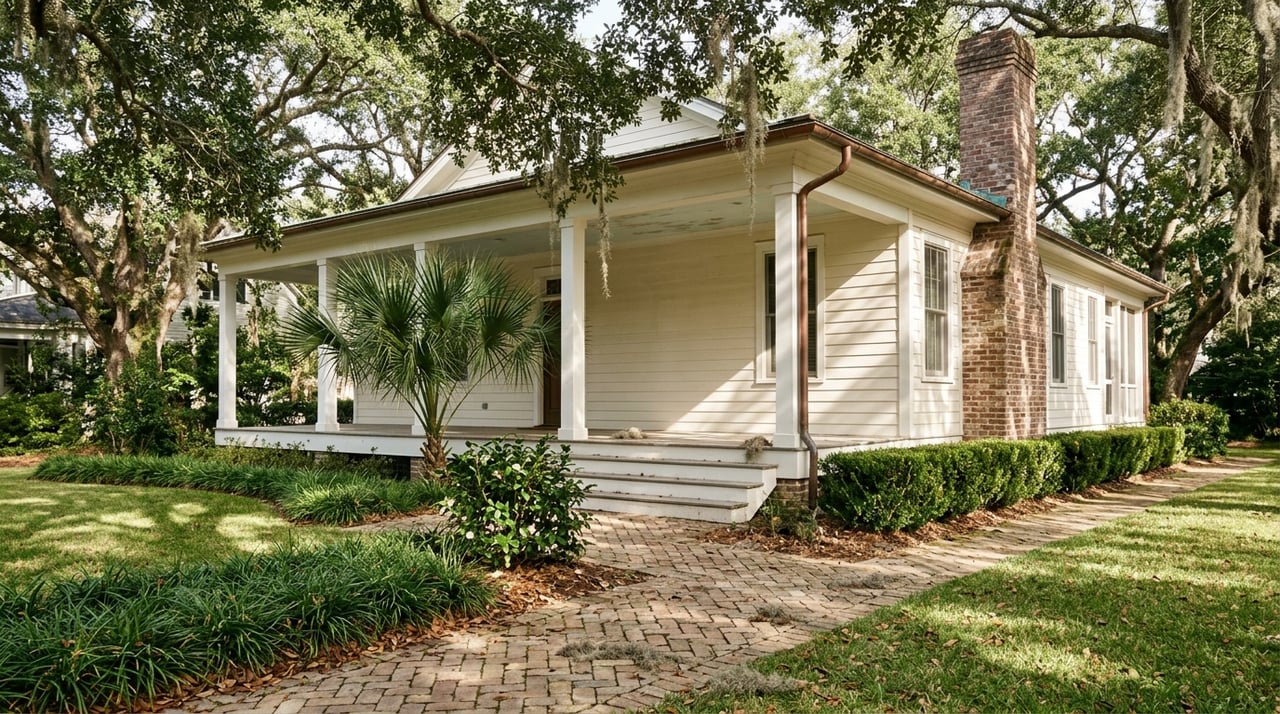
Ask most buyers what protects a 1920s bungalow on East 52nd Street from being torn down for something bigger, and they will point to the neighborhood's status on the National Register of Historic Places. It sounds airtight. It is not. The National Register listing that Ardsley Park and Chatham Crescent received in 1985 carries real prestige and zero enforcement power. It cannot stop a permit, block a demolition, or require anyone to preserve anything. The tool that actually does that job did not exist until 2018, and it works differently than most buyers assume, both narrower and more permissive at the same time.
That gap between reputation and mechanism matters if you are shopping for a fixer in this neighborhood, and it matters even more if your plan involves anything more ambitious than paint and appliances.
Two Protections, Filed Thirty-Three Years Apart
Ardsley Park-Chatham Crescent's National Register listing covers roughly 400 acres and about 998 contributing buildings, bounded by Victory Drive to the north, 54th Lane to the south, Bull Street to the west, and Waters Avenue to the east. The two subdivisions were laid out in 1909 and 1910 by Savannah developers Harry Hays Lattimore and William Lattimore on the Ardsley side, with Chatham Crescent designed in the Beaux-Arts style by Henri Bignault, who trained at the Ecole des Beaux-Arts in Paris. Architects including Henrik Wallin and Hyman Witcover designed many of the homes that still stand.
The listing is a designation, not a permitting authority. When Savannah's own preservation community pushed to close that gap in 2017 and 2018, the argument they made to city planners was blunt: a National Register listing is prestigious but powerless against a bulldozer. Residents who wrote in support of the change described the honor as symbolic only, unable to stop the demolitions already happening on the neighborhood's edges.
That advocacy resulted in Article Q of the Savannah zoning ordinance, which created a Conservation Overlay District covering Ardsley Park and Chatham Crescent, officially designated CD-1. The city applied the same concept to Ardmore and Chatham Terrace as CD-2, and later to Daffin Park and part of Parkside as CD-3, so this is a citywide pattern for older neighborhoods that never got a formal historic overlay.
| Designation | Established | What it actually does |
|---|---|---|
| National Register Historic District | 1985 | Confers recognition and eligibility for certain tax incentives; no local permitting authority |
| Ardsley Park-Chatham Crescent Conservation District (CD-1) | 2018 | Requires Planning Commission review before a permit is issued for demolition of a contributing building |
What Gets Reviewed, and What Doesn't
Here is the part that surprises buyers in both directions. CD-1 is not a full local historic overlay like the ones governing parts of Downtown Savannah, where paint colors, fence materials, and window replacements can all require sign-off. Ardsley's Conservation District has one job: it establishes a public process for the Metropolitan Planning Commission to evaluate proposed demolition of a contributing structure before a building permit can be issued. That is the entire scope.
Interior renovation is not reviewed. In-kind exterior repair is not reviewed. Most cosmetic updates, from a new roof to refinished floors to a kitchen gut job, proceed the way they would anywhere else in the city. If your plan is to buy a dated bungalow and modernize it room by room, the Conservation District has almost nothing to say about your project. If your plan is to buy a lot with the intention of clearing it for new construction, that is where the review process engages, and it can add time to a timeline that a buyer building elsewhere in Chatham County would not encounter.
This distinction is worth sitting with before you write an offer. A buyer who assumes the whole neighborhood operates like a strict historic overlay may over-budget for approvals they will never need. A buyer who assumes nothing is protected may be surprised when a teardown plan lands in front of the Planning Commission instead of moving straight to permit.
What the Current Market Actually Rewards
Ardsley Park's median sale price over the trailing twelve months sits at roughly $678,000, down about 5 percent from the period before it, and homes here have been taking around 57 days to sell, a touch longer than the national average. That is a meaningful shift from the pace this neighborhood kept even two years ago, when a well-priced bungalow could be under contract within days.
For a buyer whose plan is renovation rather than replacement, this is the environment where that plan actually pencils. A softer market means more inventory of the estate sales and long-time-owner listings that carry original hardwood, untouched kitchens, and the occasional knob-and-tube wiring still in the walls. It also means more time to do the homework this neighborhood rewards: confirming whether a property sits on a corner lot with wider setback flexibility, walking the crawl space with an inspector, and understanding exactly which of your renovation plans need a call to the Planning Commission and which do not.
None of that homework changes if you are buying to live in the house for decades or buying to renovate and sell. It changes the offer you write and the contingencies you build into it.
The Closing Document With a Thirty-Day Shelf Life
Separate from anything zoning-related, almost every buyer in this housing stock will run into Georgia's Official Wood Infestation Report, still known around town as the termite letter. It is not required by state law. It is required by nearly every lender, and FHA and VA loans will not close without one.
The report follows a state-standardized form and covers five organisms: subterranean termites, powder post beetles, wood boring beetles, dry wood termites, and wood decaying fungus. It does not cover general pests, mold, or mildew, and it only documents what a licensed inspector can actually see and access on the day of the visit. In a neighborhood built on crawl spaces rather than slabs, that access question matters. An HVAC unit blocking a crawl space entry, a locked outbuilding, or a finished basement wall can all leave a section of the report marked inaccessible, which some lenders will require you to resolve before they accept it.
The detail that catches people off guard during a real estate transaction is the clock. A completed report is valid for 30 days from the date it is signed. Order it too early in a slow-moving closing and you may need a second inspection, and a second fee, to get a report that is still current on closing day. If an active infestation turns up within that window, the issuing pest control company is responsible for treatment, after which the property is reinspected and a fresh report is issued, restarting the 30 days from that new date.
It is also worth asking the seller directly whether the home carries an active termite bond. Many older Savannah homes do, and a transferable bond can move to the new owner as part of the sale, which is a detail worth confirming in writing rather than assuming.
A Few Questions Worth Asking Before You Write an Offer
Does the Conservation District control what color I can paint the house or what kind of fence I can install? No. CD-1 reviews demolition of contributing buildings. Paint, fencing, and most exterior finishes are not part of that review.
If I want to add a garage or expand a kitchen, does that count as demolition? Additions and expansions are treated differently than teardown of an existing contributing structure. If your plans involve removing a significant portion of the original building, it is worth confirming with the Planning Commission early, before the scope of work is finalized.
Is the termite letter legally required to close in Georgia? State law does not require it, but it functions as a practical requirement because most lenders will not fund a loan without one, and it is customary practice in a state where the pest pressure is high year-round.
What if the report comes back with findings I was not expecting? A finding does not end a transaction. It typically opens a negotiation over treatment, repair, or price, with the issuing company handling remediation and reissuing the report once the work is done.
Ardsley Park rewards buyers who understand its two-tier protection system and the paperwork that comes with a neighborhood this old. If you are weighing a bungalow here, whether the plan is a light refresh or a full renovation, Kati Ann Wright and The Wright Group can walk the property with you, help you separate what the city will review from what it will not, and time the closing details so nothing catches you off guard on the way to the front door.