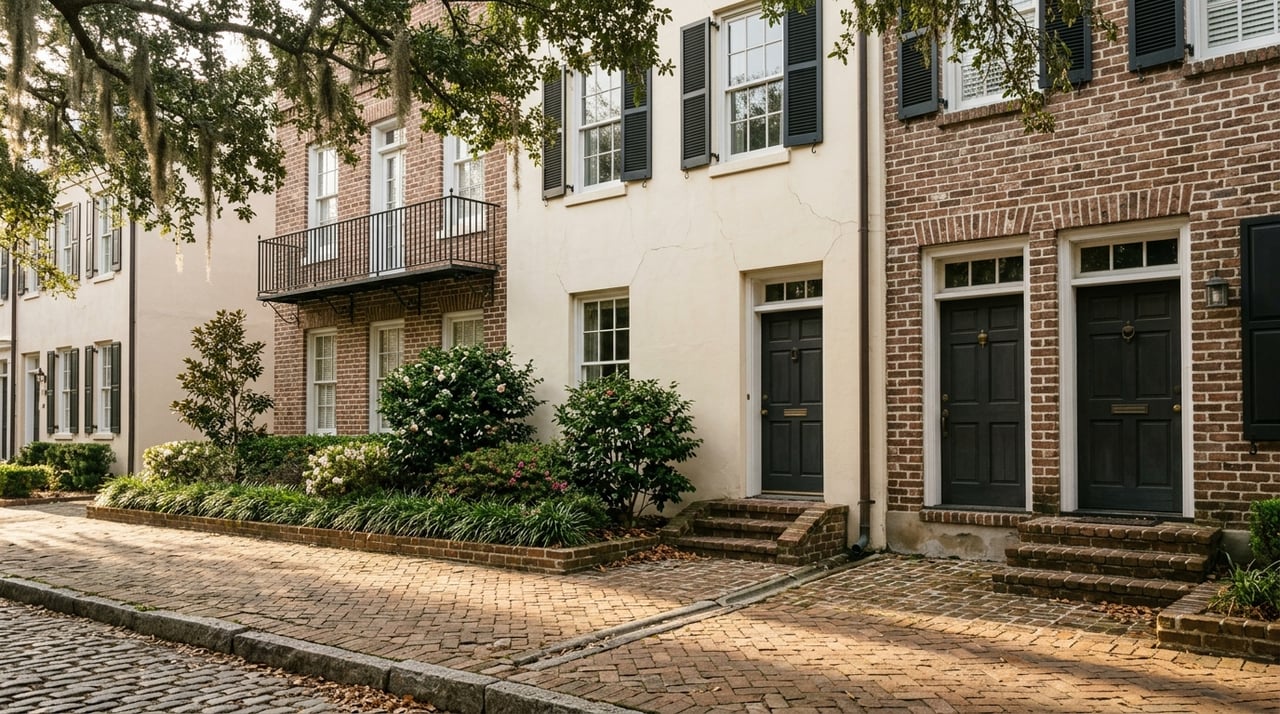
Thinking about buying in Downtown Savannah? The square you choose can shape your daily life just as much as the home itself. If you are drawn to historic architecture, walkable streets, and the feeling of living inside Savannah’s story, understanding the squares can help you narrow your search with more confidence. Let’s dive in.
Why Savannah’s squares matter
Downtown Savannah’s Historic Landmark District packs 22 green squares and more than 1,600 historically and architecturally significant structures into about 2.5 square miles. That layout comes from James Oglethorpe’s 1733 plan, built around a grid of streets, wards, and park-like squares. The result is a downtown that still feels unusually easy to navigate on foot.
For you as a buyer, that matters in practical ways. The squares are not just beautiful landmarks. They also help define the feel of each pocket of downtown, from lively and public-facing to tucked-away and residential.
How to read the squares as a buyer
A helpful way to think about Savannah’s squares is by daily-life mood. Some feel closely tied to downtown activity and convenience. Others feel like classic historic showpieces, while some read as quieter garden settings with a more relaxed pace.
If you are home shopping in 31401, this framework can help you match your lifestyle to the right part of the Historic District.
Most urban squares
Johnson Square, Reynolds Square, and Wright Square
If you want to be in the middle of downtown energy, these squares stand out. Johnson Square is Savannah’s oldest square and historic commercial hub, which gives it one of the strongest city-center identities. Reynolds Square feels polished and lively, anchored by well-known downtown landmarks like the Olde Pink House and Lucas Theatre.
Wright Square adds a deep civic and historic character, centered on Tomochichi’s grave and the Lutheran Church of the Ascension. Homes near these squares may appeal to you if you want immediate access to dining, shopping, and the busier rhythm of downtown life. They are a strong fit for buyers who see walkability and city convenience as top priorities.
Classic historic squares
Columbia, Oglethorpe, Lafayette, Madison, Monterey, and Taylor
These squares often match what buyers picture when they imagine postcard-worthy Downtown Savannah. Columbia Square is known for the Davenport House and Kehoe House, making it especially appealing for buyers who love architecture and preserved historic character. Oglethorpe Square has a refined atmosphere shaped by the Owens-Thomas House.
Lafayette Square is one of the city’s most iconic settings, with the Cathedral of St. John the Baptist, the Hamilton-Turner House, and Flannery O’Connor’s childhood home nearby. Madison Square also offers a dense concentration of historic landmarks, including St. John’s Episcopal Church, the Green-Meldrim House, and the Sorrel-Weed House.
Monterey Square brings major architectural presence through Temple Mickve Israel and the Mercer House. Taylor Square stands apart because it is the only square where all original historic buildings remain. If preservation and architectural continuity matter to you, that detail may carry extra weight.
Quieter garden squares
Chatham, Whitefield, Washington, Troup, and Crawford
Not every square has the same level of foot traffic or public activity. Some feel more intimate and residential, which can be a better fit if you want historic district living with a calmer day-to-day setting. Chatham Square is framed by Gordon Row’s identical townhouses, creating an orderly and tucked-in townhouse feel.
Whitefield Square has a gazebo and Victorian architecture that give it a distinctly garden-like setting. Washington Square is known for having some of Savannah’s oldest houses, which adds a strong residential presence without the heavier retail activity found in more central areas.
Troup Square has a compact neighborhood feel, shaped by the Armillary Sphere and the McDonough Row Houses. Crawford Square reads as more tucked away than showy, based on its residential setting and lower public profile. For buyers who want the Historic District experience without being in the center of the busiest blocks, these squares are often worth a closer look.
What daily life looks like downtown
One reason buyers are drawn to Savannah’s squares is that downtown is not only scenic. It is also practical. The Historic District is widely described as extremely walkable, with access to more than 300 shops, restaurants, and attractions.
The City of Savannah also supports downtown mobility with a fare-free shuttle and ferry connections. For many buyers, that makes a car feel less central to everyday life. If your ideal routine includes walking to coffee, dinner, shopping, or an evening out, downtown Savannah makes that easier than many historic-city settings.
Shopping, dining, and evening activity
Broughton Street is a major anchor for boutiques and fine dining. City Market offers an open-air mix of dining, shopping, and arts activity. River Street adds cobblestones, waterfront views, shops, and restaurants to the experience.
That access is part of the appeal, but it also affects what living nearby feels like. A home near the most central squares may place you closer to Savannah’s public-facing downtown activity, while homes near quieter squares may feel more removed from it.
Public use of the squares
The squares function like small public gardens. They are used for picnics, weddings, musicians, and tour groups, which adds to their charm and energy. It also means that living directly near a square can feel different from living on a quieter interior block.
As a buyer, it is smart to think beyond the house itself. You may love the beauty of a central square, but you should also consider how much public activity you want outside your door on a regular basis.
Event traffic matters
Savannah’s major events can shape the feel of certain areas at specific times of year. The City of Savannah notes that the St. Patrick’s Day parade route runs through Taylor, Oglethorpe, Lafayette, Johnson, Wright, Madison, and Chippewa squares. If you are considering a home near those areas, that is worth factoring into your search.
For some buyers, event energy is part of the appeal of downtown living. For others, it may be a reason to look toward quieter squares. Neither option is better. It simply depends on how you want your home to feel during Savannah’s busiest weekends and citywide celebrations.
The Forsyth Park connection
The southern part of the Historic District has a different relationship to green space because of Forsyth Park. Visit Savannah describes it as a 30-acre park with a one-mile perimeter. That larger park setting helps explain why some buyers are drawn to squares in the southern historic district.
If you want a blend of compact downtown living and access to a larger outdoor space, this part of downtown may feel especially appealing. It offers a different rhythm than the more central commercial core while still keeping you connected to the character of the Historic District.
How to choose the right square for your lifestyle
When you tour Downtown Savannah, try to look at more than architecture alone. The right choice usually comes down to how you want your days to unfold.
Here is a simple way to frame your search:
- Choose Johnson, Reynolds, or Wright if you want the most urban feel and quick access to downtown activity.
- Choose Columbia, Lafayette, Madison, Monterey, Oglethorpe, or Taylor if architectural character and classic historic scenery are high on your list.
- Choose Chatham, Whitefield, Washington, Troup, or Crawford if you want a more residential and low-key setting.
It can also help to visit the same area at different times of day. A square that feels peaceful in the morning may feel much livelier in the late afternoon or evening. In a walkable historic district, those details can make a real difference in how a home lives day to day.
Why local guidance helps
Buying in Downtown Savannah is rarely just about square footage or finishes. It is also about block-by-block feel, walkability, public activity, and how historic character fits your lifestyle. Two homes with similar features can offer very different living experiences depending on which square is nearby.
That is where local insight becomes valuable. If you want help comparing the mood, location, and long-term fit of different downtown addresses, working with a team that understands Savannah’s lifestyle patterns can make your search more focused and less overwhelming.
If you are exploring homes near Savannah’s squares and want thoughtful guidance on which part of downtown fits your lifestyle best, reach out to Kati Ann Wright for a polished, personalized home search experience.
FAQs
What do Savannah’s squares mean for a Downtown home buyer?
- Savannah’s squares help define the feel of each part of the Historic District, from lively and central to quieter and more residential, which can help you choose a location that matches your lifestyle.
Which Savannah squares feel most urban for buyers?
- Johnson Square, Reynolds Square, and Wright Square are the most urban-feeling options for buyers who want immediate access to downtown energy, dining, and convenience.
Which Savannah squares feel quieter for home buyers?
- Chatham Square, Whitefield Square, Washington Square, Troup Square, and Crawford Square tend to feel more residential and lower-key than the busiest central squares.
Are Downtown Savannah squares walkable for daily life?
- Yes. The Historic District is known for strong walkability, with access to hundreds of shops, restaurants, and attractions, plus a fare-free downtown shuttle and ferry connections.
Which Savannah squares are affected by St. Patrick’s Day traffic?
- According to the City of Savannah, the parade route runs through Taylor, Oglethorpe, Lafayette, Johnson, Wright, Madison, and Chippewa squares, so those areas can feel much busier during major events.
Why do some buyers look near Forsyth Park in Downtown Savannah?
- Forsyth Park offers a larger green-space setting in the southern Historic District, which appeals to buyers who want historic downtown living with easier access to a major park environment.